 SCREWS
 NUTS
 BOLTS
 WASHERS
 SPACERS & STANDOFFS
 PRECISION/CUSTOM PARTS
 PINS
 WIRE HANDLING
 INSERTS
 ANCHORS
 DRILL BITS, TAPS, & DIES
 ABRASIVES & SAWBLADES
 SAFETY EQUIP.
 MISC.
 MATERIAL TYPES
 PLATING TYPES
Tapered Pins: Small Components That Make a Big Difference in Industrial Equipment Reliability
Created at : Oct 19, 2026
In industrial manufacturing, even the smallest components can have a significant impact on equipment performance. A machine may contain hundreds of individual parts, but its reliability often depends on how accurately those parts fit together and remain aligned during operation. This is where tapered pins play an important role.
Designed to provide secure positioning and precise alignment, tapered pins are used in machinery, mechanical assemblies, and industrial equipment where maintaining a consistent fit is essential. Their distinctive shape offers advantages that conventional straight pins may not provide, particularly in applications requiring accurate component positioning, resistance to movement, and the ability to disassemble equipment for maintenance.
Understanding how tapered pins work and where they offer the greatest benefits can help manufacturers select more effective fastening solutions.
What Are Tapered Pins?
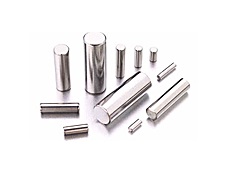
Tapered pins are cylindrical mechanical fasteners with a diameter that gradually decreases from one end to the other. Unlike straight dowel pins, which maintain a consistent diameter throughout their length, tapered pins feature a controlled taper that allows them to wedge into a correspondingly tapered hole.
This design creates a secure mechanical fit as the pin is inserted into the assembly. The mating surfaces help position components accurately while resisting unwanted movement.
Many standard taper pins use a nominal taper of 1:48, meaning the diameter changes by one unit for every 48 units of length. However, dimensions and taper requirements vary by specification, making it important to select pins that match the intended application.
Tapered pins are available in different materials, sizes, and configurations, including solid and threaded styles. The appropriate choice depends on factors such as assembly design, operating conditions, required holding force, and future maintenance needs.
Why Tapered Pins Are Important for Precision Alignment
One of the primary advantages of tapered pins is their ability to establish repeatable positioning between mating components.
In industrial equipment, even slight misalignment can create problems. Shafts, gears, housings, fixtures, and other mechanical components must often maintain specific positions relative to one another to operate correctly. When these parts shift, the resulting problems may include increased wear, vibration, reduced efficiency, or premature component failure.
Tapered pins help address these concerns by locating components within accurately prepared holes. As the pin is seated, its tapered surface engages the mating hole and establishes a controlled fit.
This makes tapered pins particularly useful in assemblies where maintaining alignment is as important as securing the components themselves.
For manufacturers producing equipment with tight dimensional requirements, this positioning capability can contribute to more consistent assembly quality and dependable operation.
How Tapered Pins Help Control Movement and Vibration
Industrial machinery routinely experiences dynamic forces during operation. Rotating components, reciprocating mechanisms, and repeated loading can place considerable stress on mechanical connections.
In certain applications, these forces can cause poorly fitted components to shift or loosen over time.
The wedging action of a tapered pin provides a mechanical advantage by creating firm contact between the pin and its mating hole. When properly designed and installed, this connection can help limit relative movement between assembled components.
However, tapered pins are not automatically suitable for every high-vibration application. Their ability to remain seated depends on the loading direction, hole geometry, installation method, and whether additional retention is required.
For applications involving significant axial forces or repeated vibration, threaded taper pins or other positive-retention features may be appropriate.
The goal is not simply to install a pin that fits, but to create a connection that remains reliable under actual operating conditions.
Tapered Pins vs. Straight Dowel Pins: Understanding the Difference
Both tapered pins and straight dowel pins are commonly used to position mechanical components, but their designs provide different advantages.
Straight dowel pins have a uniform diameter and are typically installed in precisely sized holes. They are widely used in manufacturing fixtures, machine assemblies, and applications requiring accurate positioning. Depending on the design, they may use clearance, transition, or interference fits.
Tapered pins, by comparison, rely on their gradually changing diameter and matching tapered holes to establish a wedging fit.
One practical advantage of this design is that the pin can be seated progressively as it enters the hole. This can simplify certain assembly and service operations, provided the holes are properly prepared and the pin is accessible.
Tapered pins may also be advantageous when a machine component must be removed and repositioned during maintenance.
Neither design is universally superior. Straight dowel pins may be preferable for certain precision locating applications, while tapered pins may offer benefits when secure seating and serviceability are important design considerations.
Selecting between the two requires evaluating the equipment's mechanical requirements rather than simply choosing the most familiar fastening option.
Industrial Applications Where Tapered Pins Excel
Tapered pins are used throughout industrial manufacturing, particularly in assemblies that require reliable positioning and mechanical stability.
In machine tools and manufacturing equipment, they can help locate brackets, levers, collars, and other mechanical components. Their controlled fit makes them useful where assembled parts must maintain their intended relationship during operation.
In power transmission equipment, tapered pins may be used to secure or position certain hubs, levers, and shaft-mounted components. These applications require careful engineering because the forces involved can vary significantly depending on rotational speed, torque, and operating conditions.
Industrial fixtures and tooling represent another important application. Manufacturing fixtures must hold components in consistent positions to support repeatable production. Tapered pins can provide a practical positioning method for selected fixture assemblies, particularly when disassembly is anticipated.
They are also found in mechanical linkages, agricultural equipment, and general industrial machinery where durable, serviceable connections are needed.
Across these applications, the underlying purpose remains the same: maintaining the correct relationship between components while supporting dependable mechanical operation.
The Importance of Proper Hole Preparation and Installation
Even a high-quality tapered pin cannot compensate for an incorrectly prepared hole.
Because tapered pins depend on contact between matching surfaces, hole geometry is critical to their performance. The hole must be prepared to the appropriate taper, diameter, and depth for the selected pin.
A hole that is too large may prevent the pin from developing the intended fit. An undersized or improperly tapered hole can produce excessive localized contact, improper seating, or damage during installation.
Manufacturers commonly use appropriately sized taper reamers to prepare mating holes. When multiple components are assembled together, reaming them in their intended position can help establish the required alignment.
Installation force also matters. Excessive driving force can damage the pin or surrounding components, while insufficient seating may leave the connection vulnerable to movement.
Following the applicable fastener specification and equipment manufacturer's installation requirements helps ensure that the finished assembly performs as intended.
Material Selection and Long-Term Performance
The material used to manufacture a tapered pin affects its strength, wear resistance, corrosion resistance, and suitability for different environments.
Steel tapered pins are commonly used in general industrial machinery because they offer strength and durability for many mechanical applications. Hardened steel options may be appropriate where greater resistance to wear or deformation is required.
Stainless steel tapered pins can provide corrosion resistance in environments where exposure to moisture or certain chemicals is a concern. However, stainless steel grades differ in mechanical properties, and corrosion resistance alone should not determine material selection.
Engineers should also consider the materials of the surrounding components. Differences in hardness, thermal expansion, and surface characteristics can affect how the pin seats and performs over time.
Selecting the correct material helps protect both the fastener and the larger assembly.
Why Fastener Specifications Matter
Although tapered pins may appear simple, small dimensional differences can significantly affect their performance.
The pin's nominal diameter, length, taper, material, and end configuration must match the engineering requirements of the assembly. Depending on the application, drawings may reference standards such as ASME B18.8.2 or applicable metric standards.
Threaded taper pins introduce additional considerations because the threaded portion may be used to facilitate removal or provide retention, depending on the design.
Substituting an incorrectly sized or specified pin can compromise the fit, even when the replacement appears similar to the original component.
For industrial purchasing teams and maintenance departments, verifying specifications before ordering helps prevent assembly delays, unnecessary rework, and avoidable equipment downtime.
Finding the Right Tapered Pins for Industrial Applications
Fastener selection involves more than matching a part name to a catalog description. Industrial buyers must consider dimensional requirements, material properties, operating conditions, and compatibility with existing equipment.
This is particularly important when sourcing replacement components for machinery or obtaining fasteners for new manufacturing projects.
Working with a knowledgeable industrial fastener supplier can simplify the sourcing process and help purchasing teams identify products that meet their technical requirements.
TS Fasteners serves industrial customers seeking dependable fastening solutions, including standard and specialty fastener requirements. Whether a project involves locating pins, bolts, nuts, washers, or other mechanical fastening components, having access to a supplier that understands industrial applications can help streamline procurement.
For tapered pin requirements, providing the applicable specifications, dimensions, material requirements, and anticipated quantities is an important first step in determining sourcing options.
Small Fasteners, Significant Mechanical Benefits
Tapered pins demonstrate how thoughtful fastener design can improve the performance of an entire mechanical assembly.
Their ability to establish secure positioning, support accurate alignment, and accommodate certain maintenance requirements makes them valuable in a wide range of industrial applications.
When properly specified and installed, these relatively small components can help manufacturers maintain equipment reliability, reduce unwanted component movement, and support consistent mechanical performance.
For industrial buyers seeking tapered pins or other specialty fastening solutions, contact TS Fasteners to discuss project specifications and available sourcing options.